
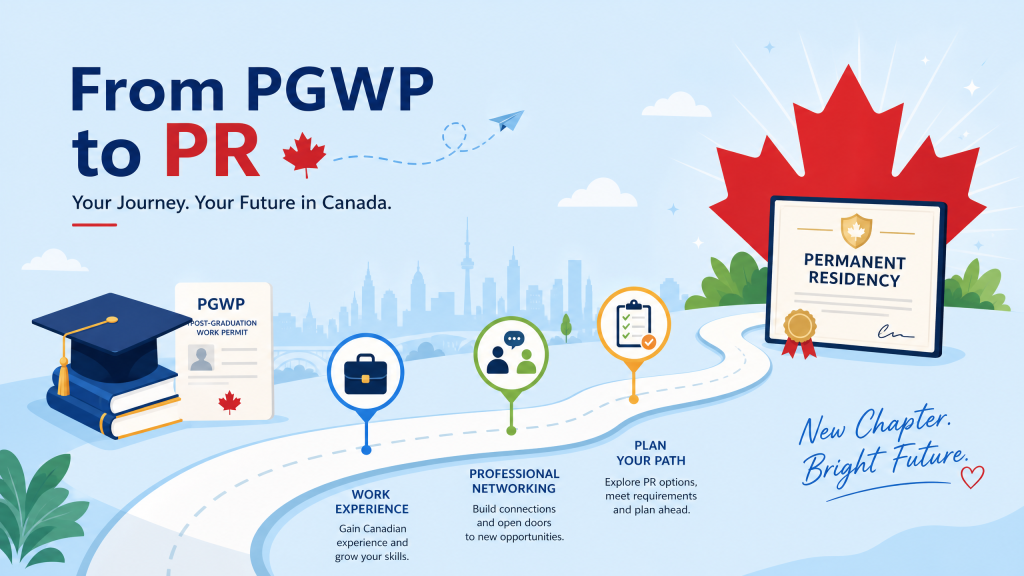

For international students who graduate from a Canadian institution, the Post-Graduation Work Permit (PGWP) can provide an important opportunity to gain Canadian work experience after completing their studies.
Choosing the right job after graduation is about more than finding the highest salary.
For many international graduates, the ideal PGWP job should provide:
- Relevant professional experience
- Strong earning potential
- Opportunities for career advancement
- Skills that Canadian employers need
- Potential eligibility for Canadian immigration programs
- A clear connection to the graduate’s education and career goals
This guide explores the best jobs for international graduates on a PGWP in 2027, including technology, healthcare, engineering, business, finance, skilled trades, education, and other high-demand career fields.
Important: Canadian immigration programs and eligibility requirements can change. PGWP holders should verify current requirements through the Government of Canada’s official immigration website before making immigration decisions.
What Is a PGWP?
A Post-Graduation Work Permit (PGWP) is an open work permit that can allow eligible international graduates to gain Canadian work experience after completing an eligible program at a Canadian designated learning institution.
One of the biggest advantages of a PGWP is that graduates generally do not need a job offer from a specific employer before obtaining the permit.
This gives international graduates flexibility to search for employment across Canada.
The length of a PGWP can vary depending on factors such as the program completed and the applicable rules.
Why Choosing the Right PGWP Job Matters
Your first job after graduation can have a major impact on your career.
A strong PGWP position can help you:
- Build Canadian work experience
- Develop professional references
- Increase your income
- Build industry connections
- Gain specialized skills
- Improve your long-term career prospects
- Potentially strengthen your profile for permanent residence programs
For graduates planning to remain in Canada permanently, the type of work they choose can also matter because different immigration programs have different eligibility criteria.
Best Jobs for PGWP Holders
Here are some of the strongest career options for international graduates in Canada.
1. Software Developer
Typical roles:
- Software Developer
- Software Engineer
- Full-Stack Developer
- Backend Developer
- Front-End Developer
- Mobile Developer
Software development remains one of the most attractive career paths for graduates with computer science and technology backgrounds.
Why it’s a good PGWP career
Software developers can work across multiple industries, including:
- Financial services
- Healthcare
- Technology
- E-commerce
- Telecommunications
- Government
- Consulting
The occupation can also provide opportunities for remote and hybrid employment.
Useful skills
- Python
- Java
- JavaScript
- TypeScript
- SQL
- React
- Node.js
- AWS
- Azure
- Git
2. Data Analyst
Data analytics is another excellent option for international graduates.
Common job titles
- Data Analyst
- Business Data Analyst
- Healthcare Data Analyst
- Reporting Analyst
- BI Analyst
- Operations Analyst
Companies increasingly rely on data to make decisions about customers, finances, operations, healthcare, and marketing.
Useful skills
- SQL
- Python
- Excel
- Power BI
- Tableau
- R
- Statistics
- Data visualization
A graduate with a degree in data analytics, statistics, computer science, economics, or a related discipline may find this career particularly attractive.
3. Data Scientist
Data science is generally more advanced than traditional data analysis and can offer strong career opportunities.
Data scientists may work on:
- Predictive modeling
- Machine learning
- Artificial intelligence
- Forecasting
- Customer analytics
- Risk modeling
- Healthcare analytics
Useful skills
- Python
- R
- SQL
- Machine learning
- Statistics
- TensorFlow
- PyTorch
- Cloud platforms
A master’s degree can be particularly useful for advanced data science roles.
4. Cybersecurity Analyst
Cybersecurity is another strong career option for international graduates.
Organizations need professionals who can protect:
- Networks
- Cloud infrastructure
- Applications
- Databases
- Customer information
- Financial systems
Common job titles
- Cybersecurity Analyst
- Security Analyst
- Information Security Analyst
- SOC Analyst
- Security Engineer
Useful certifications
Depending on the position, employers may value certifications such as:
- CompTIA Security+
- CISSP
- Certified Ethical Hacker
- AWS Security
- Azure Security
5. Cloud Engineer
Cloud computing has become an important part of modern IT infrastructure.
Cloud engineers work with platforms such as:
- AWS
- Microsoft Azure
- Google Cloud
They may design, deploy, secure, and maintain cloud infrastructure.
Useful skills
- Linux
- Networking
- Docker
- Kubernetes
- Terraform
- AWS
- Azure
- Google Cloud
Cloud-related experience can be valuable across technology, banking, healthcare, government, and consulting.
6. Artificial Intelligence and Machine Learning Engineer
AI-related careers are increasingly attractive for graduates with strong technical backgrounds.
Potential roles include:
- Machine Learning Engineer
- AI Engineer
- Applied Scientist
- NLP Engineer
- Computer Vision Engineer
- AI Researcher
These roles typically require stronger programming, mathematics, and machine-learning skills.
Useful skills
- Python
- Machine learning
- Deep learning
- PyTorch
- TensorFlow
- SQL
- Statistics
- Natural language processing
- Generative AI
7. Healthcare Data Analyst
Healthcare is another strong field for international graduates.
Healthcare organizations need professionals who can analyze:
- Patient data
- Claims
- Clinical outcomes
- Hospital operations
- Healthcare costs
- Revenue cycle data
- Quality metrics
Potential employers include:
- Hospitals
- Insurance companies
- Pharmaceutical companies
- Health technology companies
- Government organizations
- Consulting firms
Graduates with backgrounds in healthcare, data analytics, statistics, public health, computer science, or health informatics may find this field attractive.
8. Financial Analyst
Finance offers several career opportunities for international graduates with business, finance, economics, accounting, mathematics, or data backgrounds.
Potential positions include:
- Financial Analyst
- Investment Analyst
- Risk Analyst
- Business Analyst
- Credit Analyst
- Treasury Analyst
Useful skills
- Excel
- Financial modeling
- SQL
- Power BI
- Python
- Financial reporting
- Data analysis
Professional certifications can also help depending on the career path.
9. Business Analyst
Business analysts work at the intersection of business and technology.
They may:
- Analyze business processes
- Gather requirements
- Improve workflows
- Support technology projects
- Analyze performance data
- Communicate with technical and nontechnical teams
This can be a good option for graduates with backgrounds in:
- Business administration
- Information systems
- Data analytics
- Finance
- Economics
- Computer science
10. Project Coordinator or Project Manager
Project management can be a strong career path for graduates who enjoy organizing teams, processes, budgets, and deadlines.
Potential industries include:
- Technology
- Construction
- Healthcare
- Consulting
- Engineering
- Finance
International graduates can begin with roles such as:
- Project Coordinator
- Project Analyst
- Project Administrator
- Junior Project Manager
Later, they can progress toward project management positions.
11. Mechanical Engineer
Engineering remains an important career category in Canada.
Mechanical engineers can work in:
- Manufacturing
- Energy
- Automotive
- Construction
- Aerospace
- Industrial systems
International graduates should carefully verify Canadian licensing requirements where the position requires professional engineering credentials.
12. Electrical Engineer
Electrical engineers work in areas such as:
- Power systems
- Electronics
- Telecommunications
- Automation
- Manufacturing
- Renewable energy
Graduates should check provincial licensing requirements for regulated engineering positions.
13. Civil Engineer
Civil engineering can provide opportunities in:
- Construction
- Infrastructure
- Transportation
- Environmental projects
- Urban development
Canada’s infrastructure and construction sectors create opportunities for professionals with appropriate qualifications and experience.
However, professional licensing can be important for certain engineering positions.
14. Registered Nurse
Healthcare can be an attractive field for international graduates, particularly those who completed Canadian nursing programs.
Potential positions include:
- Registered Nurse
- Licensed Practical Nurse
- Clinical Nurse
- Community Nurse
However, nursing is a regulated profession.
Graduates must satisfy the applicable provincial registration and licensing requirements before practicing as regulated professionals.
15. Pharmacy and Healthcare Professions
Other healthcare careers can include:
- Pharmacist
- Medical Laboratory Technologist
- Occupational Therapist
- Physiotherapist
- Medical Imaging Technologist
The important consideration is that many healthcare professions are regulated.
Graduates must meet the relevant licensing requirements in the province where they intend to work.
16. Supply Chain Analyst
Supply chain professionals help organizations manage:
- Inventory
- Procurement
- Logistics
- Transportation
- Warehousing
- Forecasting
Potential job titles include:
- Supply Chain Analyst
- Procurement Analyst
- Logistics Coordinator
- Operations Analyst
- Demand Planner
Data analytics skills can be particularly valuable in modern supply chain roles.
17. Marketing Analyst
Marketing analytics combines business, marketing, and data.
Marketing analysts may work with:
- Google Analytics
- Customer data
- Advertising performance
- Market research
- Conversion rates
- Customer segmentation
Strong analytical and digital marketing skills can help graduates compete for these positions.
18. Human Resources Specialist
HR can be an option for graduates with backgrounds in:
- Human resources
- Business administration
- Psychology
- Organizational management
Common positions include:
- HR Coordinator
- HR Specialist
- Talent Acquisition Specialist
- Recruitment Coordinator
- People Operations Specialist
19. Skilled Trades
University graduates aren’t the only PGWP holders who can build successful careers in Canada.
Skilled trades can offer strong employment opportunities depending on the region and occupation.
Examples include:
- Electrician
- Plumber
- Welder
- HVAC technician
- Industrial mechanic
- Construction technician
Some trades require provincial certification or apprenticeship requirements.
20. Early Childhood Educator
Early childhood education can be another career option for graduates with relevant Canadian education.
Demand varies by province and occupation.
Because immigration programs and provincial nomination programs can prioritize certain occupations at different times, graduates interested in this field should check current provincial requirements.
Best PGWP Jobs by Degree
Choosing a job related to your education can make your job search more focused.
| Degree | Potential PGWP Jobs |
|---|---|
| Computer Science | Software Developer, AI Engineer, Cloud Engineer |
| Data Analytics | Data Analyst, BI Analyst, Business Analyst |
| Data Science | Data Scientist, ML Engineer |
| Cybersecurity | Security Analyst, Security Engineer |
| Finance | Financial Analyst, Risk Analyst |
| Accounting | Accountant, Financial Analyst |
| Engineering | Engineer, Project Coordinator |
| Healthcare | Healthcare Analyst, Clinical roles |
| Business | Business Analyst, Operations Analyst |
| Marketing | Marketing Analyst, Digital Marketing Specialist |
| Supply Chain | Supply Chain Analyst, Logistics Coordinator |
| Human Resources | HR Specialist, Recruiter |
Highest-Paying PGWP Jobs
Salary varies significantly by:
- Province
- City
- Industry
- Employer
- Education
- Experience
- Technical skills
- Seniority
In general, specialized technology, engineering, healthcare, finance, and management positions can offer stronger salaries than entry-level general positions.
Some potentially high-paying career paths include:
- AI/Machine Learning Engineer
- Software Engineer
- Data Scientist
- Cloud Engineer
- Cybersecurity Engineer
- Engineering roles
- Financial Analyst
- Specialized healthcare roles
- Product Manager
- Senior Business Analyst
Don’t choose a career solely based on salary.
A slightly lower-paying job that gives you strong Canadian experience and career progression may be more valuable than a higher-paying job with limited advancement.
Best PGWP Jobs for Permanent Residence
Many international graduates use the PGWP period to gain Canadian work experience while preparing for permanent residence.
However, there is no single job that guarantees permanent residence.
Eligibility depends on the immigration program and the requirements in effect when you apply.
Potential pathways can include:
- Canadian Experience Class
- Provincial Nominee Programs
- Other Express Entry-linked programs
- Regional or occupation-specific immigration programs
The Government of Canada can change program requirements, occupation priorities, and invitation thresholds.
Therefore, graduates should regularly review current requirements instead of relying on older immigration advice.
Does Your PGWP Job Need to Match Your Degree?
A PGWP is generally an open work permit, so the work authorization itself is not equivalent to a closed employer-specific work permit.
However, choosing employment related to your education can still be beneficial for your career.
It can help you:
- Build specialized experience
- Strengthen your resume
- Develop industry connections
- Pursue professional advancement
- Build a coherent career history
For immigration purposes, however, whether a particular job counts toward a specific program depends on the rules of that program.
Can You Work Any Job on a PGWP?
An open work permit generally provides substantial flexibility, but there can still be restrictions depending on the particular permit and applicable conditions.
Before accepting employment, check the conditions on your work permit and the current IRCC rules.
Also remember that working legally does not necessarily mean that the job will count toward every immigration program.
This distinction is extremely important.
How to Find a PGWP Job in Canada
1. Start Before Graduation
Don’t wait until your final semester ends.
Start applying several months before graduation.
2. Use Canadian Job Platforms
Look for opportunities through:
- Indeed Canada
- Government Job Bank
- Company career websites
- University career centers
- Professional associations
3. Optimize Your Canadian Resume
Canadian employers generally prefer concise resumes that highlight:
- Relevant experience
- Skills
- Achievements
- Education
- Certifications
Avoid unnecessarily long resumes.
Build a Strong LinkedIn Profile
Your LinkedIn profile should clearly communicate:
What you do + what you specialize in + what value you provide.
For example:
Data Analyst | SQL, Python, Power BI | Healthcare Analytics | Business Intelligence
This is much stronger than simply:
Recent Graduate Seeking Opportunities
Use Networking
Many jobs are found through professional connections.
Consider:
- Alumni events
- Industry conferences
- Career fairs
- LinkedIn networking
- Professional associations
- University events
- Informational interviews
Don’t only ask people for jobs.
Build genuine professional relationships.
Get Canadian Experience
One challenge international graduates sometimes face is employers asking for “Canadian experience.”
You can address this by pursuing:
- Internships
- Co-op opportunities where applicable
- Contract positions
- Entry-level roles
- Volunteer professional work
- University projects
- Freelance work where legally appropriate
The goal is to demonstrate that you can work effectively in a Canadian professional environment.
Consider Smaller Canadian Cities
Toronto and Vancouver are popular destinations for international graduates, but they aren’t the only places to find opportunities.
Depending on your profession, consider cities such as:
- Calgary
- Edmonton
- Ottawa
- Winnipeg
- Halifax
- Saskatoon
- Regina
- Hamilton
- London
- Kitchener-Waterloo
The best location depends on your industry, occupation, salary expectations, cost of living, and immigration goals.
PGWP Jobs: Toronto vs. Smaller Cities
Large cities may offer:
Advantages
- More employers
- Larger professional networks
- More technology companies
- More specialized positions
But they can also have:
- Higher housing costs
- Greater competition
- Longer commutes
Smaller cities may offer:
- Lower living costs
- Less competition in some industries
- Strong opportunities in healthcare, engineering, manufacturing, agriculture, and other sectors
Choose based on your career—not just popularity.
How Long Should You Stay in Your First PGWP Job?
There is no universal rule.
If the job provides:
- Relevant experience
- Good compensation
- Professional growth
- Training
- Career advancement
it may make sense to stay.
But if the position offers no growth or is unrelated to your long-term goals, you may eventually want to move.
Always make sure that any job change complies with the conditions of your work permit and any immigration program you’re pursuing.
Should You Take a Job Outside Your Field?
Sometimes, yes.
Finding your first Canadian job can be challenging.
A temporary position outside your ideal career may provide income while you continue searching for a more relevant opportunity.
However, if permanent residence is your goal, don’t assume that every job will provide the same immigration benefit.
Before relying on employment for immigration purposes, check whether the occupation and work experience meet the requirements of the specific program you’re considering.
Common PGWP Job Search Mistakes
1. Applying to Everything
Sending hundreds of generic applications is usually less effective than targeting suitable positions.
2. Ignoring Canadian Resume Standards
Your resume should be tailored to the Canadian market and the specific job.
3. Waiting Until Graduation
Start networking and applying before graduation.
4. Focusing Only on Toronto and Vancouver
Other Canadian cities may provide excellent opportunities.
5. Choosing a Job Only Because It Pays More
Consider career growth, location, skills, and long-term goals.
6. Ignoring Licensing Requirements
Healthcare, engineering, education, and several trades can involve professional regulation.
7. Assuming Any Job Leads to PR
Your employment must meet the requirements of the specific immigration program.
PGWP Career Strategy for International Graduates
A strong strategy can be divided into three stages.
Stage 1: First 3 Months
Focus on:
- Getting Canadian employment
- Building professional references
- Improving your resume
- Networking
Stage 2: Months 4–12
Focus on:
- Developing specialized skills
- Increasing responsibilities
- Building measurable achievements
- Improving your professional network
Stage 3: Long-Term
Focus on:
- Career advancement
- Higher-skilled positions
- Professional certifications
- Permanent residence options
- Long-term career planning
Frequently Asked Questions
What are the best jobs for PGWP holders?
Technology, healthcare, engineering, finance, business analytics, skilled trades, supply chain, and other specialized occupations can offer strong opportunities.
Can I work any job on a PGWP?
A PGWP is generally an open work permit, but you should always check the conditions attached to your specific permit.
Does my PGWP job need to match my degree?
Not necessarily for the work permit itself. However, relevant employment can be valuable for your career and may matter when evaluating eligibility for specific immigration programs.
Which PGWP jobs pay the most?
Specialized positions in software engineering, AI, data science, cybersecurity, engineering, finance, healthcare, and management can offer strong salaries, although compensation varies widely.
Which PGWP jobs are best for PR?
There is no universal “best” job for PR. The best occupation depends on the immigration program, your qualifications, language ability, work experience, province, and the rules in effect when you apply.
Can I change jobs while on PGWP?
Generally, an open work permit provides flexibility to change employers, subject to the conditions of your permit and applicable immigration rules.
Can PGWP holders work remotely?
Potentially, depending on the employment arrangement and work permit conditions. You should also consider whether the employer permits remote work.
Can I work in another province?
Generally, an open work permit can provide significant geographic flexibility, but you should review the specific conditions on your permit and the requirements of any provincial immigration program you’re considering.
Final Thoughts
The best jobs for international graduates on a PGWP are not necessarily the jobs with the highest salaries.
A strong PGWP career should ideally give you a combination of:
Good income + relevant experience + career growth + in-demand skills + long-term opportunities.
Technology careers such as software development, data science, cybersecurity, cloud computing, and AI can be particularly attractive for graduates with technical backgrounds. Healthcare, engineering, finance, supply chain, skilled trades, and business roles can also offer strong opportunities depending on your qualifications and location.
If permanent residence is part of your long-term plan, research the current immigration programs before choosing your career path. Requirements can change, and a job that qualifies under one program may not necessarily qualify under another.
Most importantly, don’t wait until your PGWP is close to expiring before planning your next step.
Use your PGWP period strategically: gain Canadian experience, build specialized skills, expand your professional network, increase your earning potential, and monitor the immigration programs for which you may become eligible.
For the latest PGWP, work-permit, Express Entry, and permanent-residence requirements, always verify information through the official Government of Canada immigration website before making important decisions.