
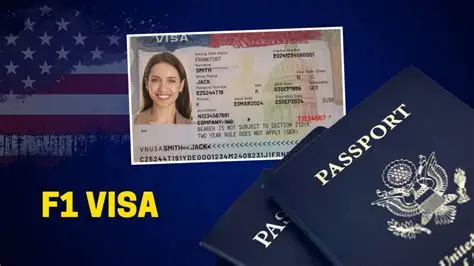

Studying in the United States remains a major goal for international students seeking globally recognized degrees, research opportunities, and career pathways. For most academic programs, the primary visa category is the F-1 student visa.
If you plan to begin a U.S. program in 2027, understanding the F-1 visa process early can help you avoid missed deadlines, incomplete documentation, and visa interview problems. This guide explains the key F-1 student visa requirements, the application process, supporting documents, financial evidence, interview preparation, and common mistakes to avoid.
Important: U.S. visa policies, interview availability, and fees can change. Always confirm the current requirements with the U.S. embassy or consulate where you will apply.
What Is an F-1 Student Visa?
An F-1 visa is a nonimmigrant visa for international students who want to study full-time at an approved academic institution in the United States. It is commonly used for students attending:
- Universities and colleges
- Graduate schools
- High schools
- Private elementary schools
- Language-training programs
- Conservatories
- Other academic institutions approved by the Student and Exchange Visitor Program (SEVP)
The F-1 visa is different from the M-1 visa, which is generally used for vocational or nonacademic programs. Students pursuing a degree, certificate, English-language program, or academic training program will usually need an F-1 visa.
To qualify, you must first be accepted by an SEVP-certified school. After admission, the school issues a Form I-20, which is one of the most important documents in your visa application.
F-1 Student Visa Requirements for 2027
While individual cases differ, most international students applying for an F-1 visa in 2027 will need to meet the following requirements.
1. Acceptance From an SEVP-Approved School
Before applying for an F-1 visa, you must receive admission from a U.S. school approved by SEVP. Your school must be authorized to enroll international students.
After you accept admission and provide the required financial information, the school’s Designated School Official (DSO) creates your SEVIS record and issues your Form I-20.
Your I-20 confirms important details, including:
- Your name and SEVIS identification number
- Your school and program information
- Your program start and end dates
- Your estimated tuition and living expenses
- Your funding information
- Your academic level and field of study
Without a valid Form I-20, you cannot apply for an F-1 visa.
2. A Valid Passport
You must have a passport valid for travel to the United States. In most cases, the passport should remain valid for at least six months beyond your intended period of stay in the U.S., unless your country has a specific agreement with the United States.
Before beginning your application, check that:
- Your passport is not expired
- Your name matches your school documents
- Your date of birth and personal details are accurate
- You have enough blank pages if your country requires visa stickers or travel stamps
If your passport is close to expiring, renew it before submitting your DS-160 whenever possible.
3. Form I-20
The Form I-20 is the Certificate of Eligibility for Nonimmigrant Student Status. It is issued by your SEVP-approved school after you are admitted and entered into the Student and Exchange Visitor Information System (SEVIS).
You and your DSO must sign the I-20 before your visa interview. You should also keep the original document safe because you may need it for:
- Your visa interview
- Entry into the United States
- Travel outside the U.S.
- OPT or CPT applications
- Future visa renewals
- Transfers to another school
Students should review every detail on the I-20 and immediately ask their school to correct any errors.
4. SEVIS I-901 Fee Payment
Most F-1 applicants must pay the SEVIS I-901 fee before attending their visa interview. The fee supports the administration of SEVIS, the system used to track international students and exchange visitors.
After payment, save and print your SEVIS I-901 payment confirmation. You may be asked to present it during your visa interview or at the U.S. port of entry.
Dependents applying for F-2 visas generally need their own I-20 forms but do not usually pay a separate SEVIS fee.
5. Completed DS-160 Form
The DS-160 is the online nonimmigrant visa application used for F-1 visa applications. You must complete the form online, submit it electronically, and print the confirmation page with the barcode.
The DS-160 asks for information about your:
- Passport
- Education history
- Employment history
- Travel history
- Family members
- U.S. school and program
- SEVIS ID number
- Intended U.S. address
- Social media information, where required
- Security and background questions
Students should answer every question accurately and consistently. Incorrect, incomplete, or misleading information can delay processing or lead to visa refusal. The U.S. Department of State specifically advises applicants to keep the DS-160 confirmation page for the visa process.
6. Visa Application Fee
F-1 visa applicants must generally pay a nonrefundable visa application fee before the interview. The U.S. Department of State currently lists the student visa application fee as $185, but applicants should verify the fee and payment method with the embassy or consulate where they will apply because local procedures can change.
Depending on your nationality, you may also need to pay a visa issuance or reciprocity fee after approval.
7. Financial Proof
One of the most important F-1 visa requirements is proof that you can pay for your education and living expenses in the United States.
A consular officer may ask for evidence showing how you will cover:
- Tuition and mandatory school fees
- Housing and living expenses
- Health insurance
- Books and supplies
- Transportation
- Personal expenses
- Travel costs
Examples of financial documents may include:
- Personal bank statements
- Parent or sponsor bank statements
- Affidavit of financial support
- Scholarship award letters
- Assistantship letters
- Education loan approval letters
- Fixed deposit certificates
- Proof of income from a sponsor
- Tax documents or employment letters from a sponsor
Your financial evidence should be credible, recent, and consistent with the funding listed on your I-20. The U.S. Department of State notes that a consular officer may request evidence of how you will pay educational, living, and travel costs.
How Much Money Do You Need for an F-1 Visa?
There is no single required bank balance for every F-1 applicant. The amount depends on the total estimated cost listed on your I-20.
For example, if your I-20 estimates one academic year at $45,000, you should be prepared to show credible funding for that amount. Some students may also need to demonstrate how later years of study will be funded, especially for multi-year degree programs.
A strong financial file should clearly answer these questions:
- Who is paying for your education?
- What is the source of the money?
- Is the funding available now?
- Does the funding match the amount shown on the I-20?
- Can the sponsor realistically afford the commitment?
Avoid submitting unexplained large deposits shortly before the interview. If there was a recent transfer, be ready to explain the source with supporting documentation.
8. Proof of Academic Preparation
Visa officers may ask for evidence that you are academically prepared for the program you plan to study.
Useful documents can include:
- Academic transcripts
- Diplomas or degree certificates
- Test scores, if required by the school
- English-language test results
- Admission letter
- Resume or curriculum vitae
- Research proposal for graduate students
- Professional certificates
- Portfolio for design, arts, or creative programs
Bring originals where possible, along with clear copies.
Your academic history should make sense for your selected program. If you are changing fields, be prepared to explain why the new program is relevant to your career goals.
9. Intent to Leave the United States After Your Studies
The F-1 visa is a nonimmigrant visa. This means you must show that you intend to leave the United States after completing your authorized program and any approved practical training.
A visa officer may consider your:
- Career plans in your home country
- Family ties
- Employment prospects
- Professional goals
- Business interests
- Previous travel history
- Academic reasons for choosing the U.S. program
You do not need to memorize a script or present unrealistic claims. Instead, explain your educational plan clearly and truthfully.
For example, you should be able to explain:
- Why you chose the United States
- Why you chose that specific school
- Why you selected the program
- How the degree fits your career plan
- How you plan to use the education after graduation
The State Department states that applicants may be asked to demonstrate their intent to depart the U.S. after their course of study.
F-1 Visa Documents Checklist for 2027
Use this F-1 visa checklist when preparing for your interview:
- Valid passport
- Form I-20 signed by you and your DSO
- DS-160 confirmation page
- Visa appointment confirmation
- Visa application fee payment receipt
- SEVIS I-901 fee payment confirmation
- U.S. visa photo, if required by your embassy or consulate
- Admission letter from your U.S. school
- Academic transcripts and certificates
- Standardized test scores, if applicable
- Financial documents
- Scholarship, assistantship, or loan documents
- Sponsor letter or affidavit of support
- Evidence of your career plans and ties outside the U.S.
- Previous U.S. visas or immigration documents, if applicable
Your embassy or consulate may request additional documents. Always check its official website before your appointment.
Step-by-Step F-1 Visa Application Process
Step 1: Apply to U.S. Schools
Research universities, colleges, or language programs that are SEVP-certified. Submit your academic documents, test scores, application fee, statement of purpose, recommendation letters, and other materials required by the school.
Step 2: Receive Admission and Form I-20
Once admitted, submit the financial documents requested by your school. The school will then issue your I-20 after creating your SEVIS record.
Step 3: Pay the SEVIS I-901 Fee
Pay the SEVIS fee using the instructions provided by the U.S. government. Print the receipt and keep it with your visa documents.
Step 4: Complete Form DS-160
Fill out the DS-160 carefully. Use the information on your passport and I-20 exactly as shown. Save your application ID and print the confirmation page after submission.
Step 5: Pay the Visa Application Fee
Pay the visa application fee according to the procedures of the U.S. embassy or consulate where you will apply.
Step 6: Schedule Your Visa Interview
Schedule your interview as early as possible. Appointment wait times vary by country, season, and visa category. The Department of State advises applicants to apply early because wait times differ by location.
Step 7: Attend the Visa Interview
Bring your documents and answer questions honestly. The interview may be short, so your answers should be direct, consistent, and easy to understand.
Step 8: Receive Your Visa Decision
The officer may approve your visa, refuse it, request additional documentation, or place the application into administrative processing.
Do not buy nonrefundable flight tickets until your visa has been issued. The U.S. government specifically warns that a visa is not guaranteed before approval.
Common F-1 Visa Interview Questions
F-1 visa interview questions often focus on your academic plans, finances, and future goals. Common questions include:
- Why do you want to study in the United States?
- Why did you choose this university?
- Why did you choose this program?
- What will you study?
- Who is funding your education?
- What does your sponsor do for work?
- How much does your program cost?
- What are your plans after graduation?
- Why not study this course in your home country?
- Do you have relatives in the United States?
- Have you traveled internationally before?
- Why are you changing your field of study?
The best preparation is to know your own application. Your DS-160, I-20, admission letter, financial documents, and interview answers should all tell the same story.
Can You Enter the United States Before Your Program Starts?
New F-1 students can receive a visa up to 365 days before their program start date. However, they generally cannot enter the United States more than 30 days before the program start date listed on the I-20.
This means you should plan your travel carefully. Arriving too early can result in problems at the airport or border.
When entering the U.S., carry:
- Your passport
- Valid F-1 visa
- Original Form I-20
- SEVIS fee receipt
- Financial documents
- School contact information
- U.S. address and housing details
Final admission is decided by the Customs and Border Protection officer at the port of entry.
Can F-1 Students Work in the United States?
F-1 students have limited employment options. In general, students may be eligible for on-campus work while maintaining full-time student status. Off-campus work usually requires authorization and must follow immigration rules.
Common options include:
- On-campus employment
- Curricular Practical Training (CPT)
- Optional Practical Training (OPT)
- STEM OPT extension for eligible graduates
OPT is temporary employment directly related to an eligible F-1 student’s field of study. Students authorized for OPT need an OPT-endorsed I-20 and must apply to U.S. Citizenship and Immigration Services for an Employment Authorization Document.
Before accepting any job, speak with your DSO. Unauthorized employment can jeopardize your F-1 status.
Can Your Family Join You on an F-1 Visa?
Your spouse and unmarried children under 21 may apply for F-2 dependent visas.
Each dependent needs an individual I-20 from your school. F-2 dependents generally do not pay a separate SEVIS fee, but they must still apply for visas and provide proof of their relationship to the F-1 student.
Common Reasons F-1 Visas Are Denied
An F-1 visa can be refused for many reasons. Common issues include:
- Insufficient financial evidence
- Weak explanation of academic goals
- Inconsistent answers during the interview
- Incomplete DS-160 information
- Concerns about nonimmigrant intent
- Unclear source of funds
- Academic plans that do not make sense
- Previous immigration violations
- Misrepresentation or fraudulent documents
Never submit fake bank statements, false employment letters, or misleading information. The State Department warns that willful misrepresentation or fraud can result in serious immigration consequences, including permanent visa refusal.
Tips to Improve Your F-1 Visa Approval Chances
Here are practical ways to prepare for a stronger F-1 visa application:
- Apply early. School admission, I-20 issuance, SEVIS payment, and embassy appointments can take time.
- Know your program. Be able to explain the curriculum, duration, and career value.
- Prepare credible financial documents. Your funding should be easy to understand and match your I-20.
- Keep your documents consistent. Names, dates, school information, and financial figures should match across all records.
- Practice concise interview answers. Avoid overly long explanations.
- Be truthful. A clear and honest answer is better than a memorized or exaggerated response.
- Check embassy-specific instructions. Procedures vary by country.
- Do not make final travel plans before approval. Visa issuance is never guaranteed.
F-1 Visa Travel Rules After You Arrive in the U.S.
If you travel outside the United States while enrolled, you may need a valid passport, a valid F-1 visa, proof of finances, and a Form I-20 with a valid travel endorsement from your DSO.
For many continuing F-1 students returning after a temporary trip of five months or less, ICE lists these as key re-entry documents: a travel-endorsed I-20, valid passport, valid visa when required, and financial evidence. Always speak with your DSO before traveling because your individual circumstances may differ.
Frequently Asked Questions About F-1 Visa Requirements
Is IELTS required for an F-1 visa?
IELTS is not a direct U.S. visa requirement. However, your school may require IELTS, TOEFL, Duolingo English Test, or another English-language exam for admission.
Can I apply for an F-1 visa without a scholarship?
Yes. You can apply without a scholarship if you can show sufficient personal, family, sponsor, or loan funding.
How early can I apply for an F-1 visa?
New F-1 students may be issued a visa up to 365 days before the program start date, but they generally cannot enter the U.S. more than 30 days before the start date.
Can I work full-time on an F-1 visa?
Not during a normal academic term unless you have specific authorization. Employment rules are strict, so consult your DSO before working.
What happens if my F-1 visa is denied?
You may reapply if you have new evidence, stronger documentation, or changed circumstances. Before applying again, understand the reason for the refusal and address the weakness in your application.
Final Thoughts
The F-1 student visa process for 2027 begins long before your embassy interview. A successful application usually depends on four things: admission to an SEVP-approved school, a correct Form I-20, credible financial proof, and a clear explanation of your academic and career plans.
Start early, organize your documents, and make sure every part of your application is accurate. With proper preparation, you can approach the F-1 visa process with confidence and focus on your next step: studying in the United States.