


Choosing an education loan is about more than finding the lender advertising the lowest interest rate.
Two education loans can have similar interest rates but very different total costs because of differences in APR, fees, repayment periods, grace periods, interest capitalization, and fixed or variable rates.
This is especially important for international students studying abroad. Students may have limited credit history, no local cosigner, and fewer financing options, which can make borrowing more expensive.
Understanding how education loan interest rates work can help you make a better financial decision and avoid taking on unnecessarily expensive debt.
In this guide, you’ll learn how to compare education loan interest rates, what APR means, how fixed and variable rates differ, how fees affect the cost of borrowing, and how to determine which education loan is actually the cheapest.
What Is an Education Loan Interest Rate?
An education loan interest rate is the percentage charged by a lender for borrowing money.
For example, if you borrow $20,000 at a hypothetical annual interest rate of 10%, the interest cost in the first year would be approximately $2,000 before considering how payments reduce the outstanding balance.
The actual amount of interest you pay depends on:
- Loan balance
- Interest rate
- Repayment period
- Payment schedule
- Whether interest accrues while you’re studying
- Whether unpaid interest is capitalized
- Loan fees
This is why simply comparing the percentage shown next to two loans isn’t enough.
What Is the Best Interest Rate for an Education Loan?
There is no single interest rate that is considered “best” for every student.
The rate you qualify for can depend on:
- Credit history
- Credit score
- Cosigner
- Income
- University
- Degree program
- Country of citizenship
- Country of study
- Loan amount
- Repayment term
- Fixed or variable structure
International students without a domestic credit history or cosigner may receive different rates from borrowers with strong credit and a qualified cosigner.
The best loan is generally the one with the lowest overall cost that you can realistically qualify for and repay.
Interest Rate vs APR: What’s the Difference?
One of the most important things to understand when comparing education loans is the difference between the interest rate and the Annual Percentage Rate (APR).
Interest Rate
The interest rate represents the cost of borrowing expressed as a percentage of the loan balance.
APR
APR can incorporate the interest rate plus certain finance charges and fees, providing a broader measure of the cost of borrowing.
This makes APR particularly useful when comparing loans from different lenders.
For example:
| Loan | Interest Rate | Fees | APR |
|---|---|---|---|
| Loan A | 9.50% | Low | 9.70% |
| Loan B | 9.25% | Higher | 10.10% |
Although Loan B has the lower advertised interest rate, Loan A could potentially have the lower overall borrowing cost.
Always look beyond the headline interest rate.
Fixed vs Variable Education Loan Interest Rates
Education loans generally fall into two major interest-rate categories:
- Fixed-rate loans
- Variable-rate loans
Understanding the difference is essential before borrowing.
Fixed Interest Rates
A fixed interest rate generally stays the same throughout the applicable loan period.
Advantages of Fixed Rates
- Predictable payments
- Easier financial planning
- Protection against future rate increases
- Easier to budget after graduation
Disadvantages
- Starting rate may be higher
- You may not benefit if market interest rates decline
Fixed rates can be attractive to students who want predictable payments after graduation.
Variable Interest Rates
A variable interest rate can change over time based on the loan’s underlying benchmark and terms.
Advantages
- May start lower than a fixed rate
- Could become cheaper if market rates decline
Disadvantages
- Payments can increase
- Future borrowing costs are uncertain
- Long-term budgeting is more difficult
A variable-rate loan may look attractive because of a low initial rate, but you should consider what could happen if rates rise.
How to Compare Fixed and Variable Rates
Don’t simply compare:
Fixed = 9%
against
Variable = 7%
The variable loan may start at 7%, but the rate could increase later.
Instead, ask:
- What is the current rate?
- What benchmark does it use?
- How often can the rate change?
- Is there a maximum rate?
- Is there a minimum rate?
- How frequently can payments change?
- What would happen if rates increased by 2% or 3%?
This gives you a more realistic picture of the potential risk.
Understanding Loan Fees
Interest isn’t the only cost associated with an education loan.
Depending on the lender, you may encounter:
- Origination fees
- Application fees
- Administrative fees
- Late-payment fees
- Returned-payment fees
- Disbursement fees
Some lenders advertise loans without certain fees, while others may include charges that affect the overall cost.
Before accepting a loan, ask:
“How much will I repay in total?”
That question is often more useful than:
“What’s the interest rate?”
How Loan Terms Affect Interest Costs
The repayment period can have a major effect on the total amount you pay.
For example, suppose you borrow $30,000.
A shorter repayment period could result in:
- Higher monthly payments
- Lower total interest
A longer repayment period could result in:
- Lower monthly payments
- Higher total interest
This means a loan with a comfortable monthly payment isn’t necessarily the cheapest loan.
How Compound Interest Affects Education Loans
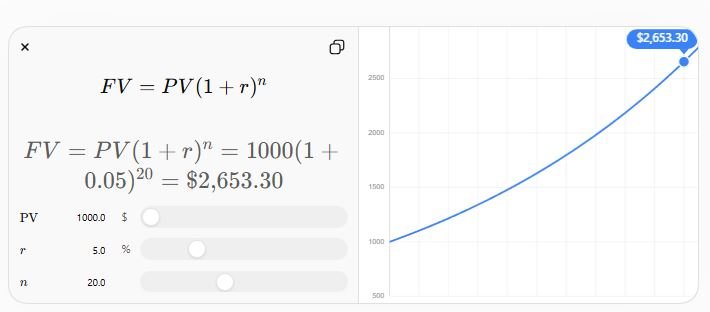
Interest can accumulate over time, and the way interest is handled during school can significantly affect the balance you eventually repay.
For a basic compound-growth illustration:
Give feedback
Some student loans allow interest to accumulate while you’re enrolled. If unpaid interest is later capitalized, it can be added to the principal balance.
For example:
You borrow $30,000.
Interest accumulates while you’re studying.
If $3,000 of unpaid interest is capitalized, your new principal could become:
$33,000
Future interest would then be calculated on the higher balance, depending on the loan terms.
This is one reason it’s important to understand whether your loan requires payments while you’re in school.
What Is Interest Capitalization?
Interest capitalization occurs when unpaid accrued interest is added to the principal balance of a loan.
This can happen under certain circumstances, depending on the loan agreement.
Potential capitalization events may include:
- Graduation
- End of a grace period
- Leaving school
- Loss of deferment
- Certain repayment-plan changes
Capitalization can increase the total amount you repay.
Before borrowing, ask the lender:
“When does unpaid interest capitalize?”
How to Compare Education Loan Rates for International Students
International students should take additional factors into account.
A student studying abroad may not have:
- A domestic credit score
- Local employment history
- A Social Security number
- A domestic cosigner
Some specialized lenders therefore evaluate international students differently.
For example, MPOWER Financing says eligible international students can apply without a cosigner or collateral. Its current published product information should be checked directly because rates and terms can change.
Prodigy Finance also offers financing to eligible international students without traditional cosigner or collateral requirements for supported programs.
The trade-off is that specialized international loans may not always have the lowest rates available to borrowers with excellent domestic credit.
How to Compare Education Loans With Different Rates
Suppose you receive three offers:
| Loan | Interest Rate | Term | Fees |
|---|---|---|---|
| Loan A | 8.5% fixed | 10 years | Low |
| Loan B | 7.5% variable | 10 years | Medium |
| Loan C | 9.0% fixed | 7 years | None |
At first glance, Loan B looks best because it has the lowest interest rate.
But that doesn’t necessarily mean it is the cheapest.
You need to determine:
- APR
- Monthly payment
- Total interest
- Total repayment
- Rate-change risk
- Fees
- Repayment flexibility
Only then can you make a meaningful comparison.
Compare Monthly Payments
Monthly payment is important because you need to know whether you can afford the loan after graduation.
But don’t use monthly payment as your only comparison.
For example:
Loan A
$450/month for 10 years
versus
Loan B
$600/month for 7 years
Loan A has the lower monthly payment, but Loan B could potentially result in substantially less total interest because you repay the debt faster.
Compare Total Repayment Cost
This is one of the most important numbers to calculate.
Your total repayment can include:
Principal + Interest + Applicable Fees
A loan with a slightly higher monthly payment could potentially save thousands of dollars over the entire repayment period.
Before accepting a loan, ask the lender for an amortization schedule or repayment estimate.
Compare Education Loan Interest Rates With a Cosigner
If you’re an international student and have access to a qualified cosigner, compare two scenarios:
Option 1: No-Cosigner International Loan
Potential advantages:
- No cosigner
- No domestic guarantor
- May accept students without local credit history
Potential disadvantage:
- Interest rate may be higher
Option 2: Private Student Loan With Cosigner
Potential advantages:
- Potentially lower interest rate
- More lender choices
- Potentially better repayment terms
Potential disadvantages:
- Requires a qualified cosigner
- Cosigner becomes financially responsible according to the loan agreement
Calculate the total cost of both options before deciding.
Should You Choose the Lowest Interest Rate?
Not necessarily.
A low interest rate is important, but it isn’t the only factor.
A loan with a low rate could still be expensive because of:
- High fees
- Long repayment period
- Variable-rate risk
- Capitalized interest
- Unfavorable repayment terms
Likewise, a loan with a slightly higher rate could potentially be preferable if it provides:
- No origination fee
- Fixed payments
- Flexible repayment
- No prepayment penalty
- A shorter repayment period
The goal is to find the best overall financing package, not simply the lowest advertised rate.
How to Calculate the Cost of an Education Loan
You don’t need to be a financial expert to compare loans.
Start by gathering:
- Amount borrowed
- Interest rate
- Loan term
- Fees
- Payment frequency
Then compare the estimated monthly payment and total repayment.
Many lenders provide online repayment calculators.
When comparing loans, use the same loan amount and repayment period whenever possible. Otherwise, you’re not comparing equivalent offers.
Questions to Ask an Education Loan Lender
Before signing an education loan agreement, ask:
About the Rate
- Is the rate fixed or variable?
- What rate will I actually receive?
- How often can the rate change?
- Is there a maximum rate?
About Fees
- Is there an origination fee?
- Are there application fees?
- Are there late fees?
About Repayment
- When does repayment begin?
- Is there a grace period?
- Are payments required while I’m studying?
- How long is the repayment term?
About Interest
- Does interest accumulate while I’m in school?
- When is unpaid interest capitalized?
About Early Repayment
- Can I make additional payments?
- Is there a prepayment penalty?
About Eligibility
- Is my university eligible?
- Is my degree eligible?
- Can international students apply?
- Do I need a cosigner?
- Do I need collateral?
How to Get a Lower Education Loan Interest Rate
There are several ways to potentially reduce your borrowing cost.
Apply With a Strong Cosigner
A qualified cosigner with strong credit may help you access better rates from some lenders.
Improve Your Credit
If you have an established credit history, maintaining strong credit can help with some private lending products.
Compare Multiple Lenders
Never assume the first offer is the best offer.
Choose a Shorter Repayment Period
If you can afford higher monthly payments, a shorter term may reduce total interest.
Look for Autopay Discounts
Some lenders offer a small interest-rate reduction for enrolling in automatic payments.
Borrow Less
This is one of the most effective ways to reduce interest costs.
Every dollar you don’t borrow is a dollar you don’t have to pay interest on.
Education Loan Interest Rates for International Students Without a Cosigner
Students without cosigners should expect fewer financing options.
Specialized international lenders may be more accessible, but their rates and terms should be compared carefully.
For example, MPOWER currently publishes fixed-rate international student financing for eligible borrowers, while Prodigy Finance uses its own eligibility and pricing structure. Current rates can change, so applicants should verify the lender’s latest terms before applying.
Don’t assume that a no-cosigner loan is automatically the best option.
Instead, compare it with:
- Home-country education loans
- University financing
- Scholarships
- Fellowships
- Assistantships
- Private loans with a cosigner
- Other international lenders
Education Loan Interest Rates by Country
Interest rates can vary depending on where you are studying.
United States
International students may consider:
- Specialized international lenders
- Private student loans
- Loans with U.S. cosigners
- Home-country education loans
Canada
Students can explore:
- International student lenders
- Canadian private financing
- Home-country education loans
- University financing
United Kingdom
Potential sources include:
- International education lenders
- Home-country banks
- University funding
- Scholarships
- Private financing
The same lender may offer different rates and terms depending on the applicant’s country, university, and program.
Education Loan Interest Rate Checklist
Before choosing a loan, check:
- Interest rate
- APR
- Fixed or variable
- Rate-change rules
- Origination fee
- Other fees
- Loan term
- Monthly payment
- Total repayment
- Grace period
- In-school payment requirements
- Interest capitalization
- Prepayment rules
- Cosigner requirement
- Collateral requirement
- Eligible university
- Eligible degree
- Eligible country
- Currency of the loan
Common Mistakes When Comparing Education Loan Interest Rates
Looking Only at the Advertised Rate
The rate you see in an advertisement may be the lowest rate available only to highly qualified borrowers.
Ignoring APR
APR can provide a more complete picture of borrowing costs.
Ignoring Fees
Fees can materially increase the cost of a loan.
Choosing a Long Repayment Period Just for the Lower Payment
Lower payments can mean paying more interest over time.
Not Considering Variable-Rate Risk
A low initial variable rate can increase later.
Borrowing More Than Necessary
A larger loan means more interest.
Not Comparing International and Local Options
Students studying abroad should consider lenders in both their destination country and home country where appropriate.
Frequently Asked Questions
What is the best education loan interest rate?
There is no universal best rate. The best rate depends on your credit profile, cosigner, country, university, degree, and loan terms. Compare APR and total repayment rather than looking only at the advertised interest rate.
Is a fixed or variable education loan better?
A fixed rate provides greater payment certainty, while a variable rate may start lower but can change. The better option depends on your financial circumstances and tolerance for rate risk.
How can I get a lower education loan interest rate?
Compare multiple lenders, maintain strong credit where applicable, consider a qualified cosigner, look for discounts, and borrow only what you need.
Do international students get higher interest rates?
They can, particularly when they don’t have local credit history or a qualified cosigner. Specialized international lenders may provide financing but can price loans differently from traditional domestic student loans.
Can I compare education loans without applying?
Yes. Many lenders provide rate estimates or prequalification tools that can help you compare potential offers before submitting a full application. Check whether a lender’s rate-check process involves a soft or hard credit inquiry.
Does a cosigner lower the interest rate?
A strong cosigner may help a borrower qualify for a lower rate with some private lenders, but this is not guaranteed.
Can I pay off my education loan early?
Many lenders allow early repayment, but you should check the specific loan agreement for any prepayment penalties or restrictions.
Final Thoughts
Knowing how to compare education loan interest rates can save you significant money over the life of your loan.
Don’t choose a loan simply because it advertises the lowest percentage.
Instead, compare the complete cost of borrowing, including:
Interest rate + APR + fees + repayment period + capitalization + monthly payment + total repayment.
For international students, also consider whether the lender requires a local credit history, cosigner, collateral, or specific university enrollment.
A loan with a slightly higher interest rate may sometimes be more suitable if it offers better repayment flexibility or fewer fees. Conversely, a loan with a low advertised rate may become expensive because of fees, a long repayment period, or variable-rate increases.
Before signing any education loan agreement, calculate how much you will actually repay and whether your expected income after graduation can comfortably support the payments.
The goal isn’t simply to find the lowest interest rate. The goal is to find the lowest reasonable total cost with terms you can realistically afford.